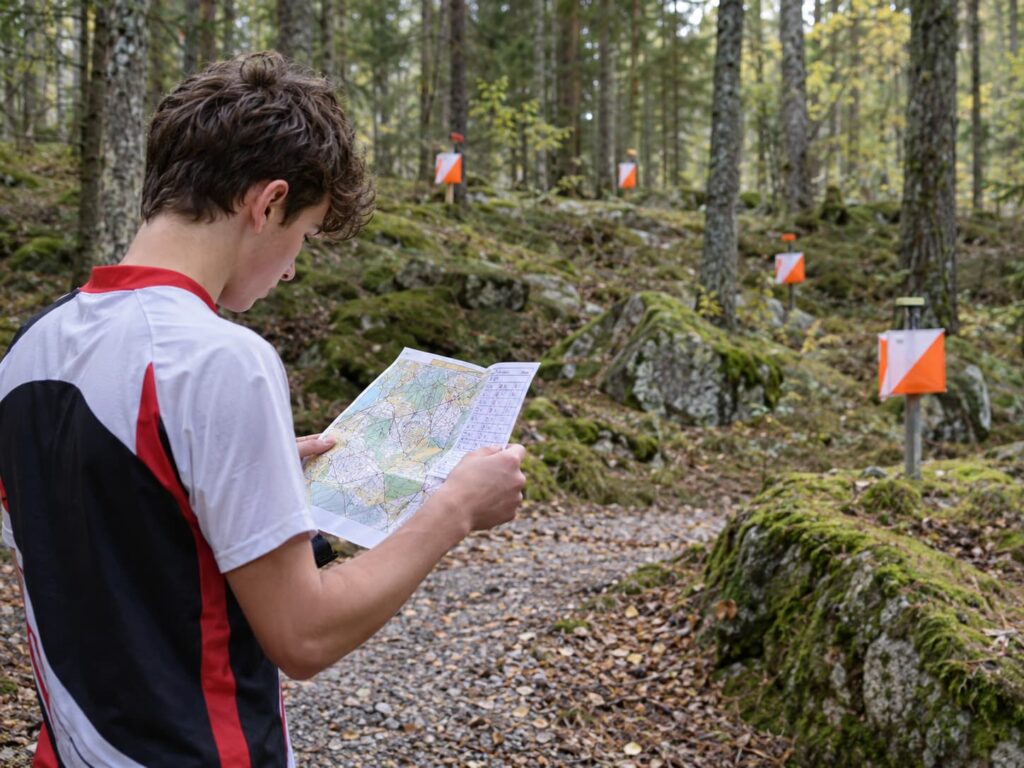
Junior trail orienteering entered a new phase in 2026 when the International Orienteering Federation (IOF) introduced a dedicated Junior class at major championships. Young athletes aged 20 or younger could compete for their own medals in PreO, TempO, and TrailO relay instead of relying exclusively on results within established adult categories. The first European junior titles were awarded in Szczecin, Poland, between July 31 and August 3, marking an important development for a discipline built around precision, map interpretation, and equal opportunities for competitors with different physical abilities.
The New Junior Class and Its Eligibility Rules
The IOF announced the introduction of the Junior class in October 2025 following consultations with national federations and athletes. A 2024 survey had identified substantial support for creating a clearer competitive pathway for younger TrailO participants. Although juniors could already enter international events, they often competed directly against experienced adults, making championship medals difficult to obtain during their early development.
The new category is open to competitors aged 20 or younger at the end of the calendar year. It operates alongside the Open class, which accepts athletes of any age, and the P class, reserved for competitors who meet the eligibility requirements related to physical impairment. Eligible young athletes may select an appropriate class for each championship event, but medals are awarded only within the class they enter.
Importantly, the reform does not introduce simplified junior courses. The IOF’s implementation document specifies that juniors should encounter the same or similar technical challenges as competitors in the established categories. The objective is to recognize developing athletes separately while maintaining the navigational standards expected at international championships.
The changes also affect national team selection. At World Trail Orienteering Championships, federations can enter up to four competitors in each of the three classes under the new allocation system, subject to additional qualification provisions. Regional championships generally allow six competitors per class. These arrangements give national federations a stronger reason to develop dedicated junior training groups rather than sending only occasional younger athletes to senior competitions.
PreO, TempO, and Relay in Junior Competition
Trail orienteering differs from conventional foot orienteering because running speed does not determine the result. Competitors follow permitted paths and identify which control flag corresponds to a precisely marked position on the map. The challenge lies in interpreting terrain shapes, vegetation boundaries, contours, and the relationships between visible objects.
The Junior class covers three established championship disciplines, each testing different skills:
- PreO: Athletes examine control locations from designated observation points and identify the correct markers. Accuracy determines the main score, while timed controls help separate competitors when necessary.
- TempO: Participants solve several map-reading tasks at each timed station. Incorrect answers add time penalties, making both speed and precision essential.
- TrailO relay: Three athletes represent their team, completing combinations of precision and timed tasks. Individual mistakes contribute to the team’s overall result.
In PreO, competitors have time to examine difficult terrain features and compare possible control positions. A small contour difference or a barely visible depression can distinguish the correct answer from several convincing alternatives. Patience and systematic observation are especially important when the landscape contains many similar features.
TempO requires a different rhythm. Competitors must interpret successive maps under time pressure, often with only a few seconds available for each decision. Rushing can lead to expensive mistakes, while excessive hesitation increases the recorded time. Relay competitions combine these demands with team responsibility, since errors made by one athlete affect the final placing of all three members.
The First Junior European Champions in Szczecin
The European Trail Orienteering Championships in Szczecin provided the first major test of the new category. The competition included TempO on July 31, two days of PreO on August 1-2, and the relay on August 3.
Slovakia’s Jonatán Furucz became the first European junior champion in TrailO by winning the TempO final. Thirteen junior competitors reached the final, which consisted of nine stations with five tasks each. Furucz recorded 323 seconds, finishing 41 seconds ahead of Czech athlete Albert Forst. Carolina Mullis, also representing Czechia, took bronze with 375 seconds.
Furucz’s victory was particularly notable because he had finished sixth in qualification. His stronger final performance demonstrated how decisive concentration and accurate decision-making become when competitors have limited time to interpret unfamiliar terrain.
The Slovak athlete secured a second gold medal in the two-day PreO competition. Furucz finished with 58 points and 165 seconds at the timed controls, one point ahead of Finland’s Matilda Lukkari. Carolina Mullis collected another bronze medal after matching Lukkari’s 57 points but recording a slower time in the timed sections.
The relay introduced a different set of challenges. Latvia won the inaugural Junior relay title, followed by Italy and Finland. Teams had to coordinate three athletes across precision controls and timed stations, with mistakes contributing penalties to the combined result. The event demonstrated that a dedicated junior category could support meaningful team competition as well as individual championships.
These results established the first generation of medalists under the new system. They also showed that young competitors from several European countries already possessed the technical skills required to perform at championship level.
Training Priorities for Young Trail Orienteers
Preparation for junior championship TrailO requires more than familiarity with a compass and an orienteering map. Athletes must learn to interpret terrain from restricted observation positions, where moving closer to a control is not permitted. Training should therefore include comparing mapped features with real landscapes from different viewing angles.
Contour interpretation deserves particular attention. Coaches can set exercises involving shallow depressions, small knolls, re-entrants, and subtle changes in slope. After each task, athletes should explain the evidence behind their choice rather than simply checking whether their answer was correct. This helps distinguish genuine terrain understanding from successful guessing.
TempO preparation should combine technical exercises with gradually increasing time pressure. Athletes can begin by solving problems without strict limits, then reduce their decision time as their accuracy improves. Reviewing incorrect answers is particularly valuable because it reveals whether mistakes result from rushed reading, confusion over map symbols, or difficulty visualizing the terrain.
Digital training offers additional opportunities. Virtual TempO exercises allow competitors to practice control identification and quick decisions when access to suitable outdoor training areas is limited. However, screen-based exercises cannot fully reproduce changes in visibility, distance perception, and terrain complexity encountered during actual competitions.
Relay preparation should include shared analysis sessions and realistic competition simulations. All three athletes need confidence in their own decisions while understanding how individual penalties affect the team. Practicing under championship-style conditions can also help younger competitors manage nerves before important events.
A Broader Future for Junior Trail Orienteering
The introduction of a separate Junior class has implications beyond awarding additional medals. TrailO is designed to place competitors with different physical abilities on comparable terms, since travel speed between observation points is not the primary measure of performance. The new age category adds a developmental pathway without removing that inclusive principle.
National federations now have greater incentives to organize junior training camps, introduce TrailO at youth events, and support athletes who may not participate in traditional running-based orienteering. Young competitors with mobility impairments can also consider the classes for which they are eligible, including the P class where certification requirements are met.
The first championship season demonstrated that the reform can produce competitive races and recognizable junior achievements. Its longer-term success will depend on whether federations expand participation, provide regular technical coaching, and create opportunities for young athletes to progress beyond their first international appearances.
Szczecin 2026 established a new milestone in the development of trail orienteering. By giving juniors their own championship standings while preserving demanding technical courses, the IOF has created a clearer route from early training to elite international competition.